
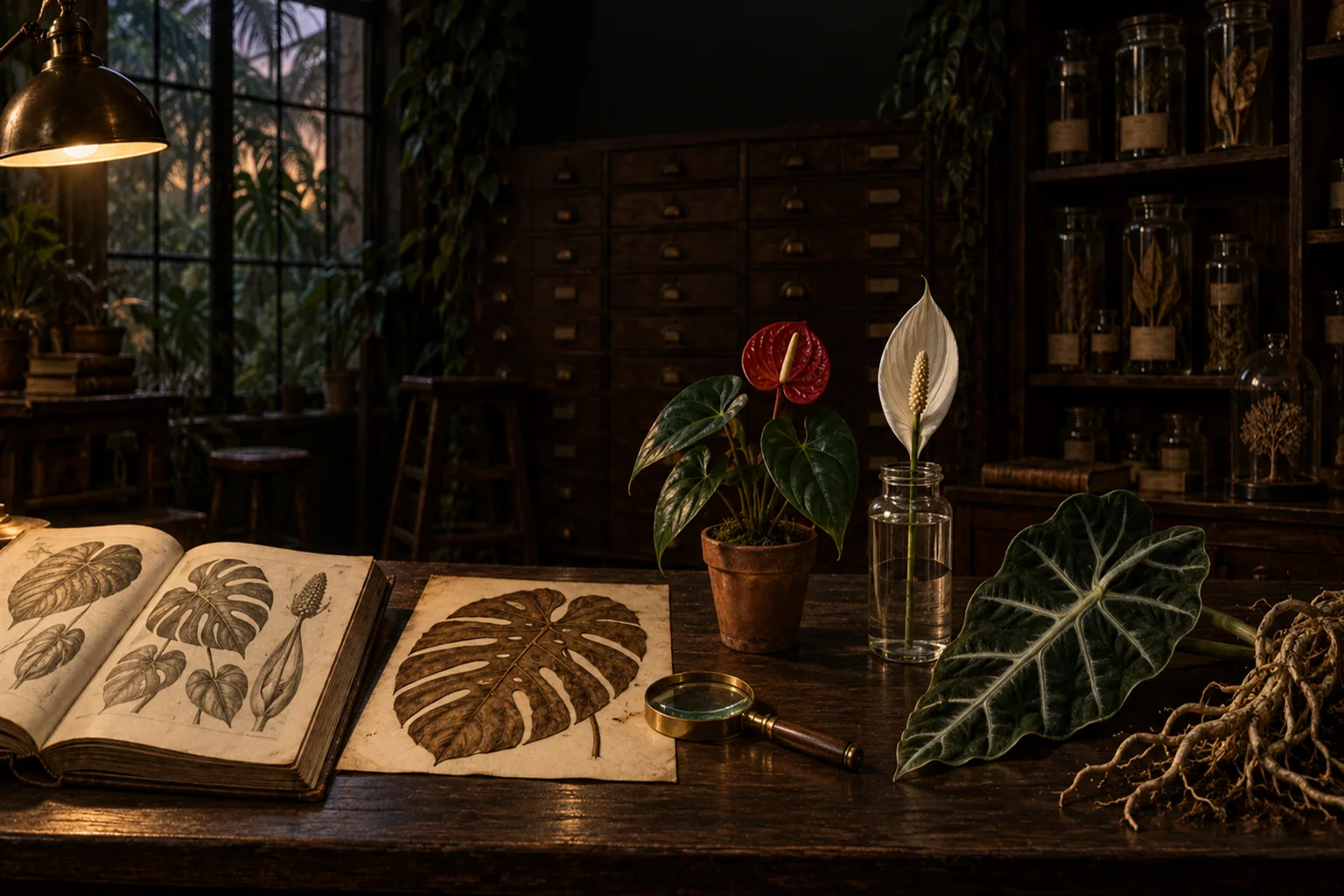
The Araceae · Start Here
AROID PRIMER
One plant family, one way of flowering — from the smallest flowering plant on earth to a bloom taller than a person.
Start Here
One family, one idea
An aroid is any plant in the family Araceae. Nearly all of them flower the same way: tiny flowers packed onto a spike, the spadix, held by a single leaf-like hood, the spathe.
Part I
The aroids you already know
Eight you may already have grown, bought or eaten.
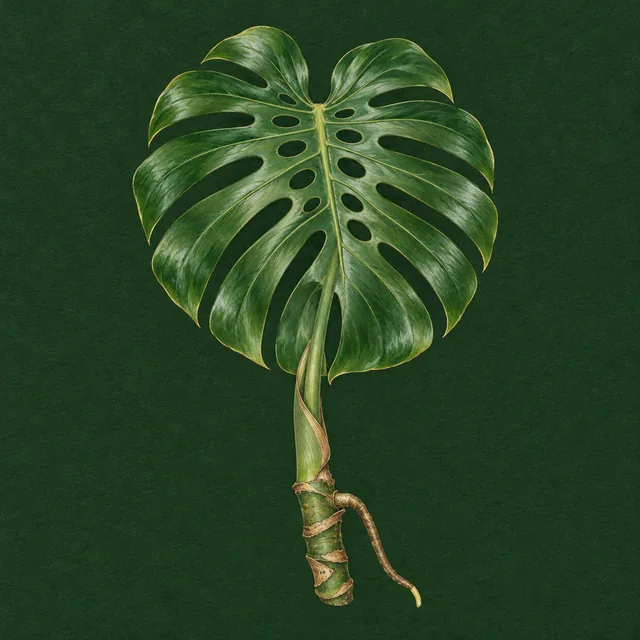
MonsteraMonstera deliciosa 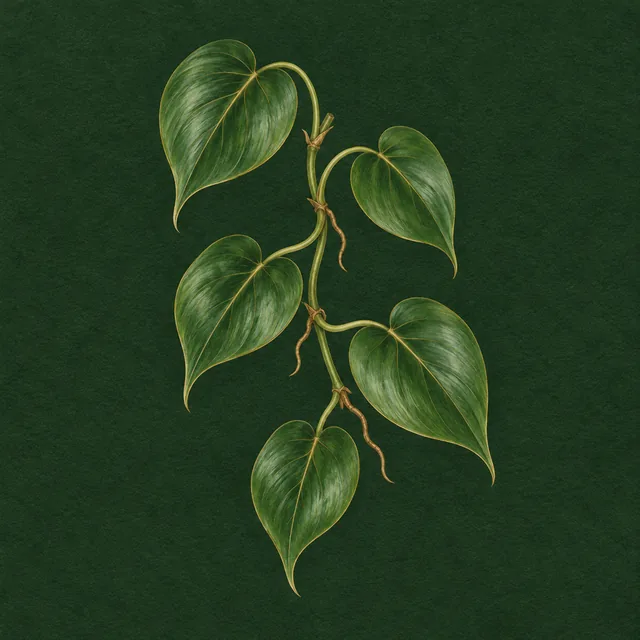
Heartleaf philodendronPhilodendron hederaceum var. oxycardium 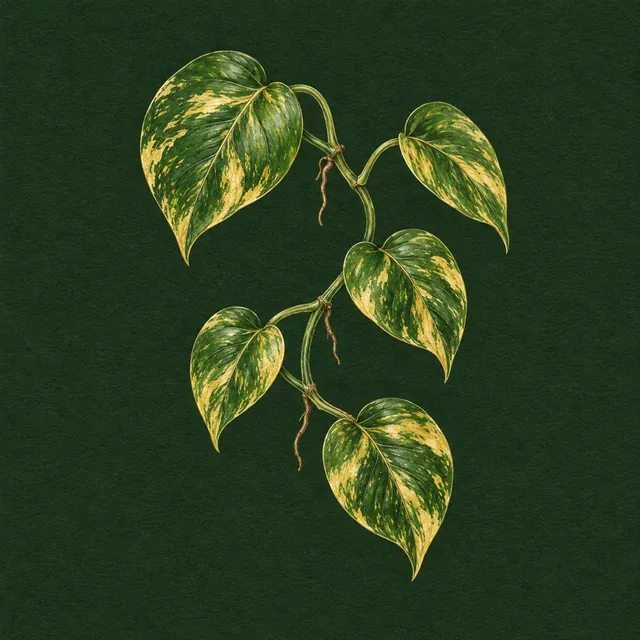
Sold as “pothos”Epipremnum aureum 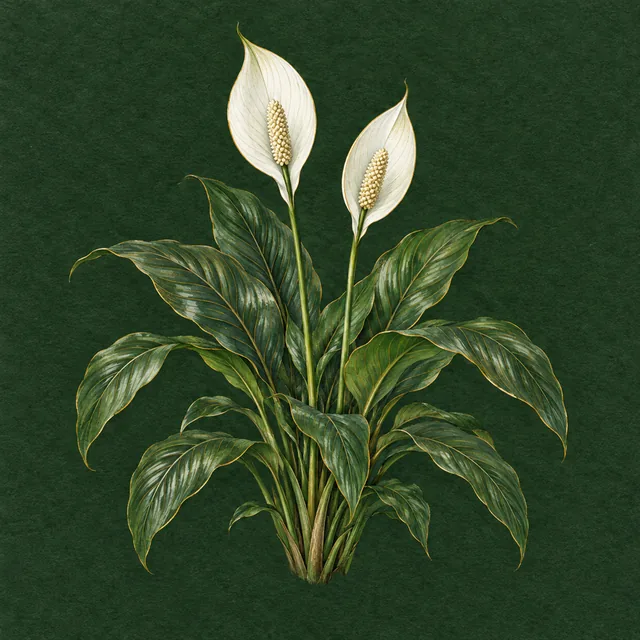
Peace lilySpathiphyllum 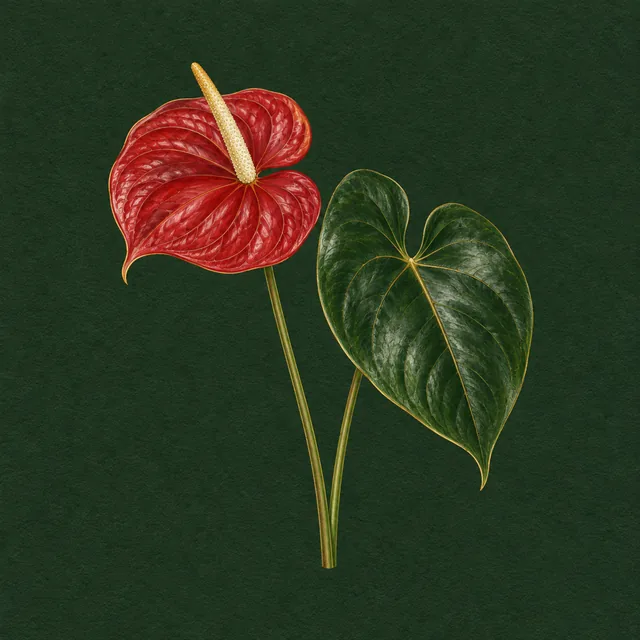
Flamingo flowerAnthurium andraeanum 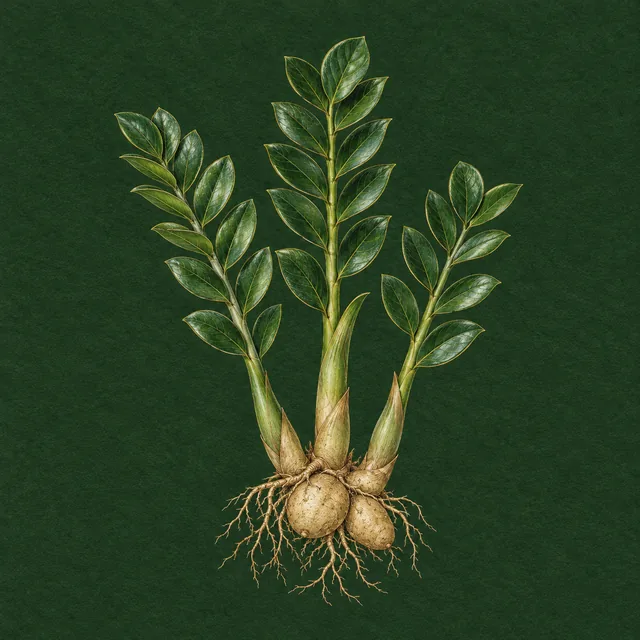
ZZ plantZamioculcas zamiifolia 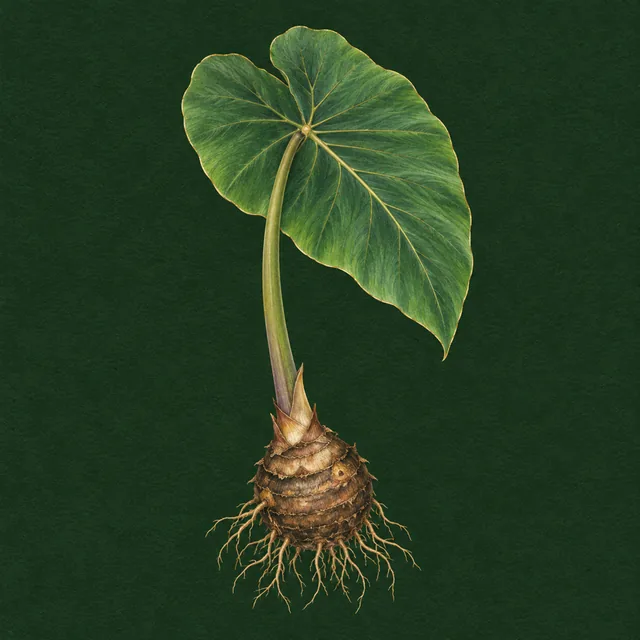
TaroColocasia esculenta 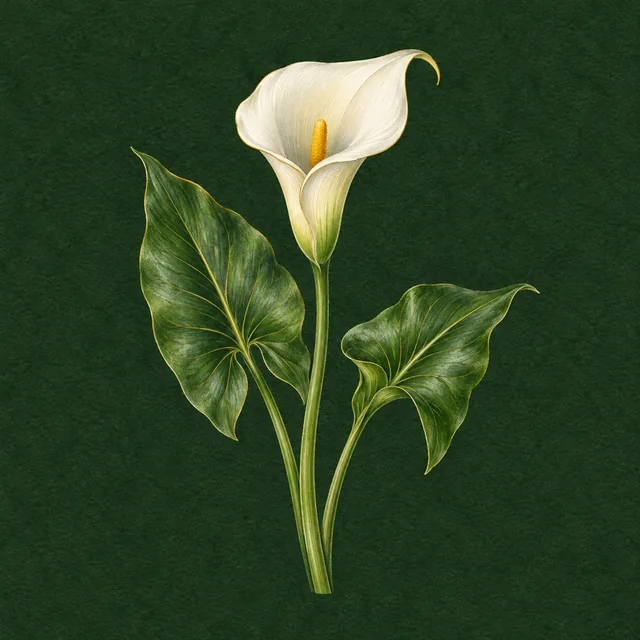
Calla lilyZantedeschia aethiopica
Mind the common names
A peace lily and a calla lily are not lilies. And a plant sold as “pothos” is usually an Epipremnum or a Scindapsus, not the genus Pothos. A shop name can also cover more than one plant. In 1997 a grower reported seeing Alocasia micholitziana labeled “African Mask”7. In 1998 another wrote that Alocasia ‘Amazonica’ had been sold under that name for years8.
Part II
The flower that isn’t one
What looks like one flower is a crowd of tiny ones. It comes in two builds.
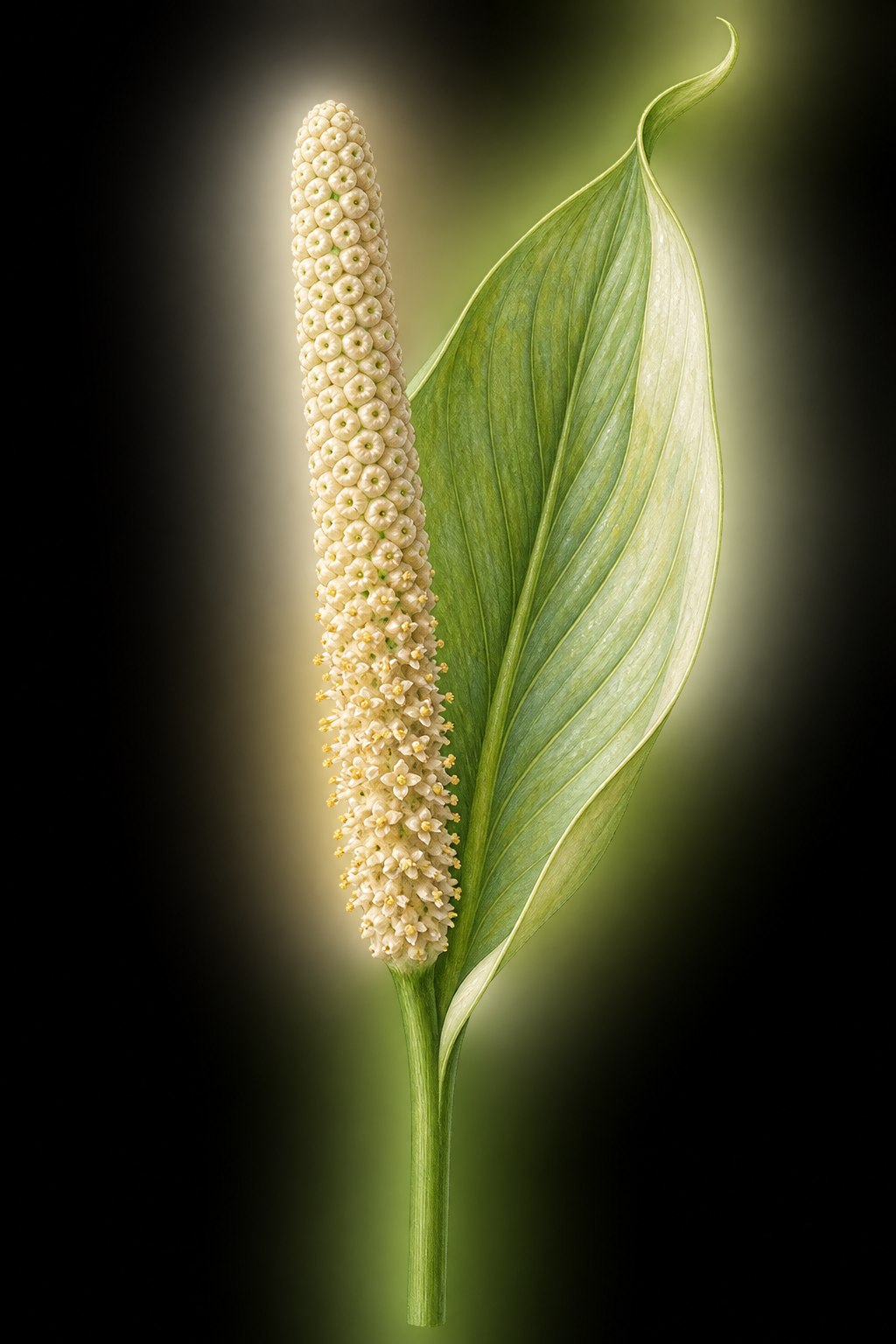
- SpatheA single leaf-like hood. White, red or green, it is the part most people call the flower.
- SpadixThe spike that carries the flowers.
- FlowersEach bump on the spadix is one tiny flower.
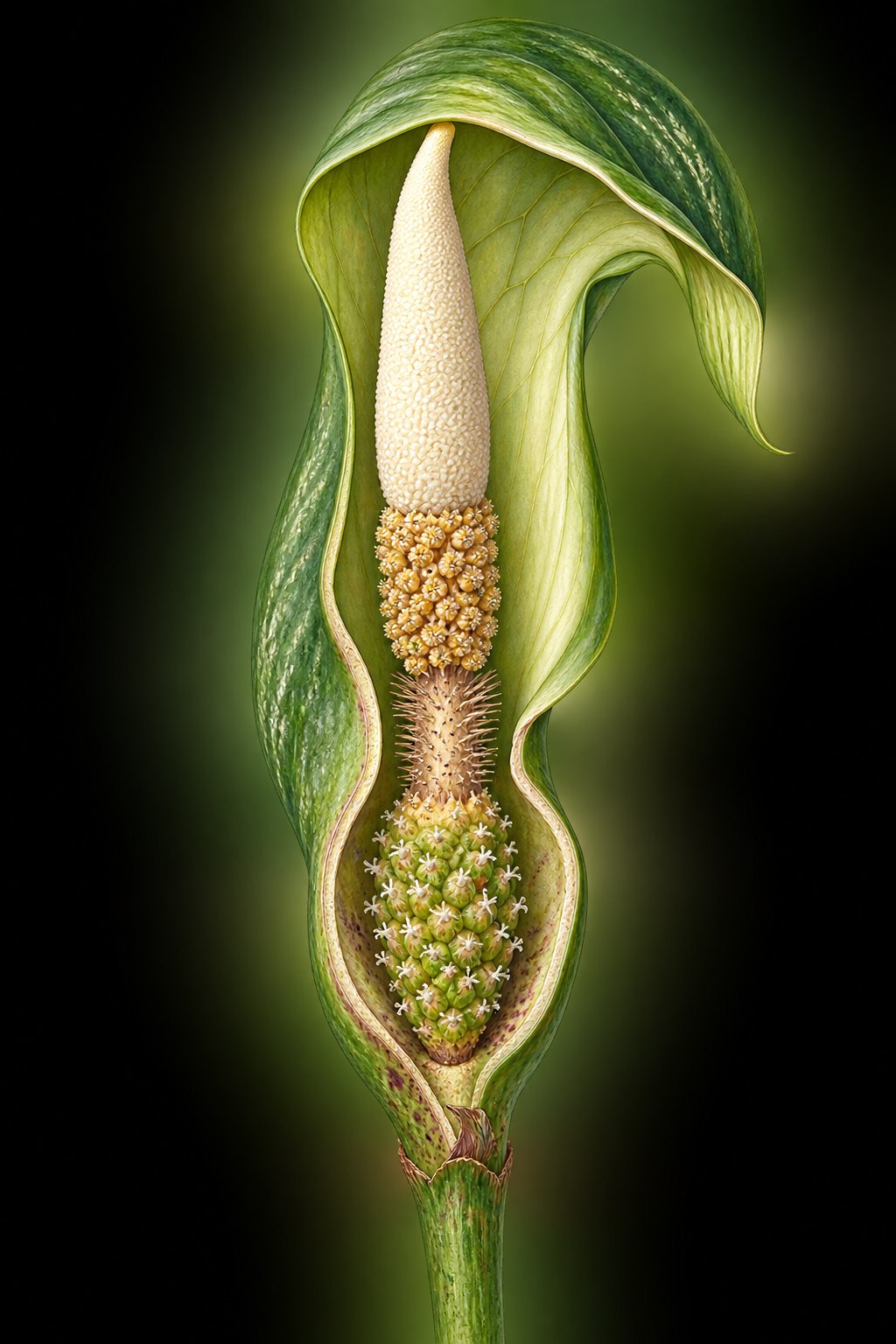
Across the family the hood and the spike take endless shapes, but the plan stays the same. It is the surest sign of an aroid.
Part III
How an aroid is built
Six words cover most of what you will see.
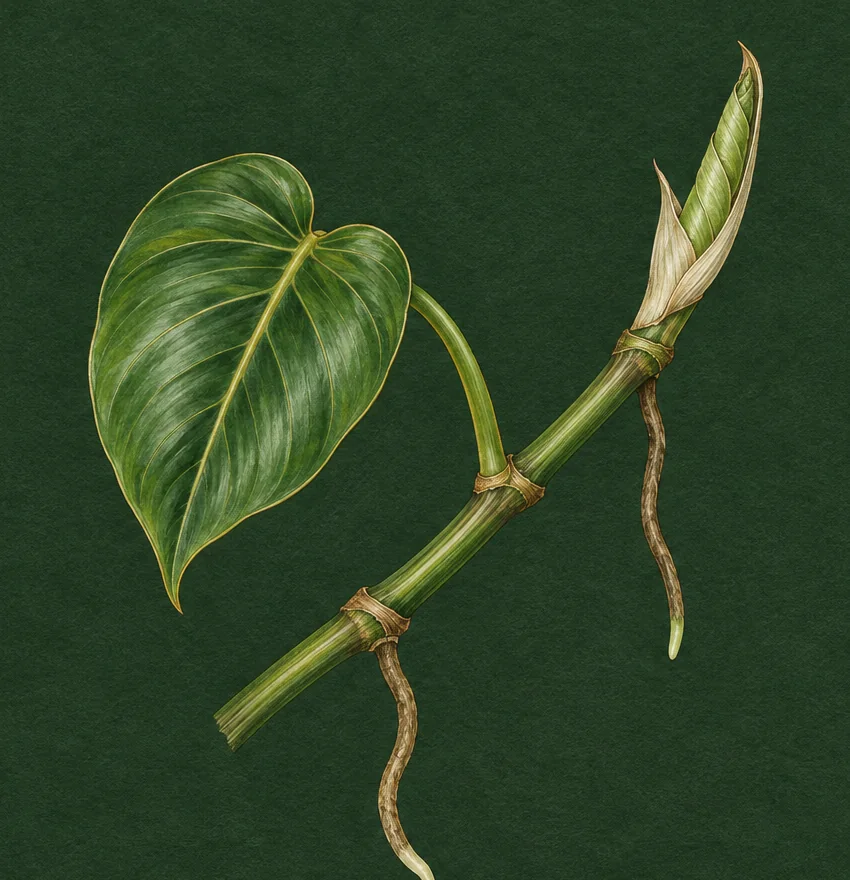
- BladeThe flat, green part of the leaf.
- PetioleThe leaf stalk.
- StemIt climbs, creeps, or stays underground.
- NodeWhere leaves and roots grow from the stem. A stem cutting needs one, though one greenhouse manager reported a tuber forming on a 12-inch piece of Amorphophallus titanum leaf9.
- Aerial rootA root that grows into the air, to cling or to feed.
- CataphyllA papery sheath that guards a new leaf, then dries.
Young plants look different
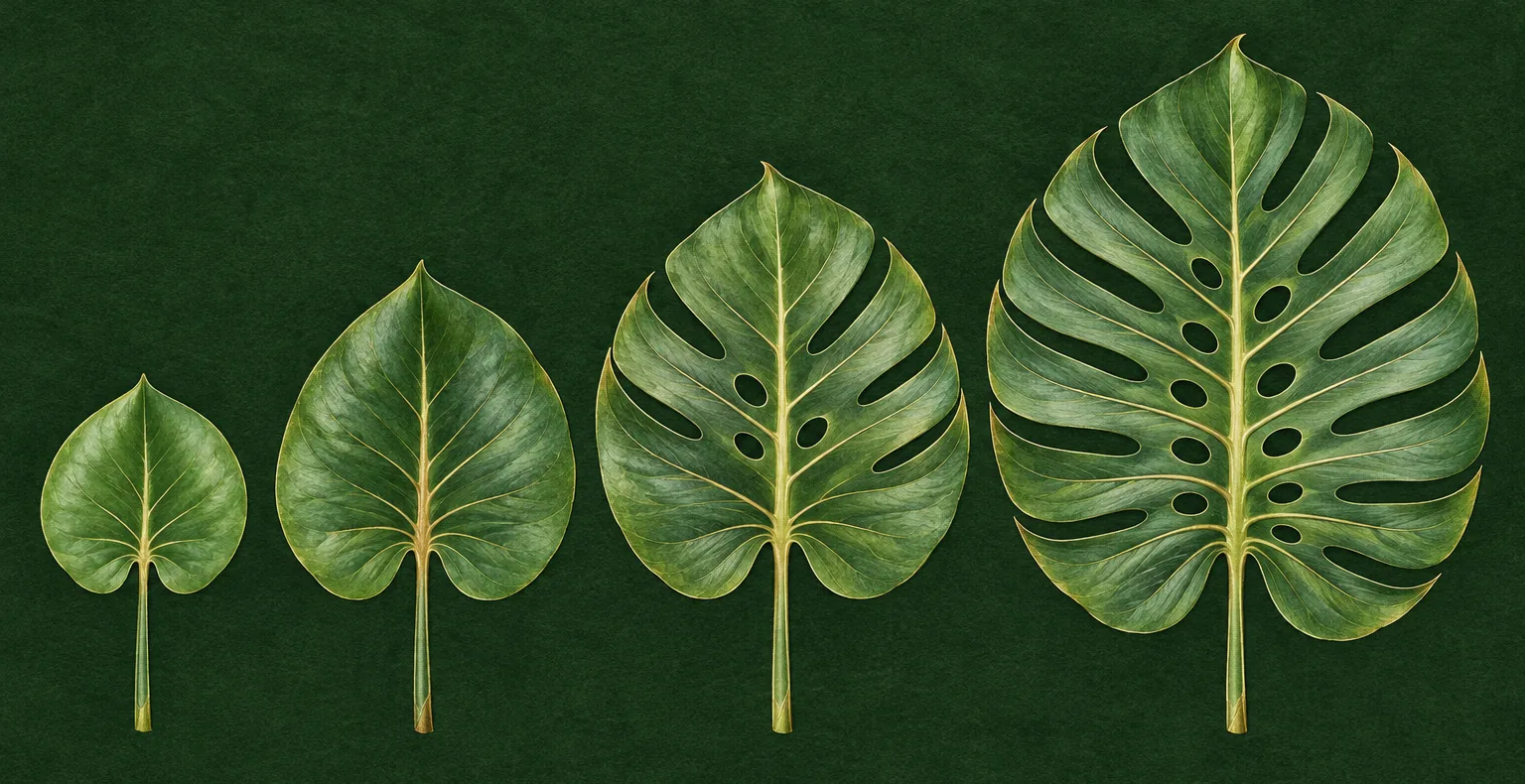
Many aroids change leaf shape as they grow. A young Monstera has no holes at all, so a plant that doesn’t match the photo may simply be young. Tom Croat of the Missouri Botanical Garden wrote in 2007 that Monstera dubia changes from mottled, overlapping juvenile leaves to solid green ones and never changes back10.
Part IV
Where they live, and how
Most aroids live in the wet tropics, richest in South and Central America and Southeast Asia. Here are five of the ways they grow2.
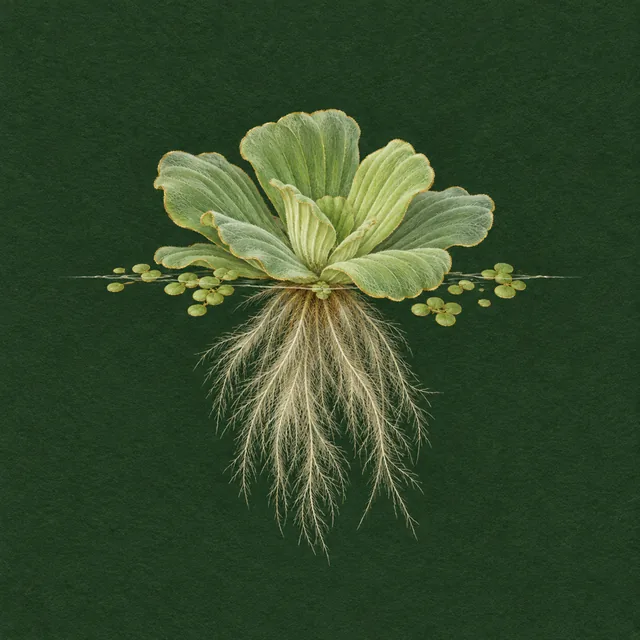
FloatingAdrift on still water. The smallest flowering plant, Wolffia, is one2. 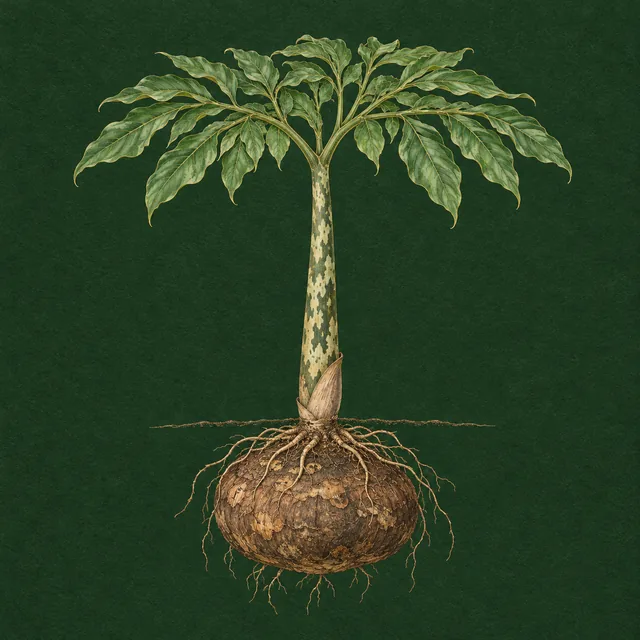
From a tuberResting underground for part of the year. The titan arum grows this way. 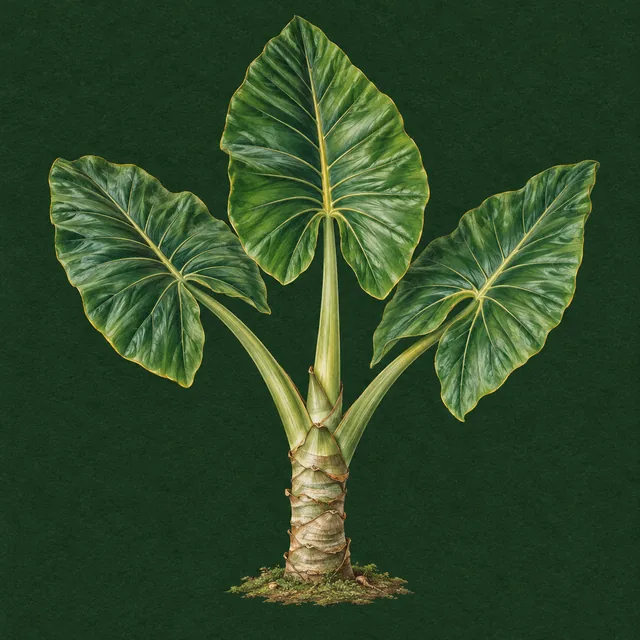
GiantHuge leaves on a thick, trunk-like stem. 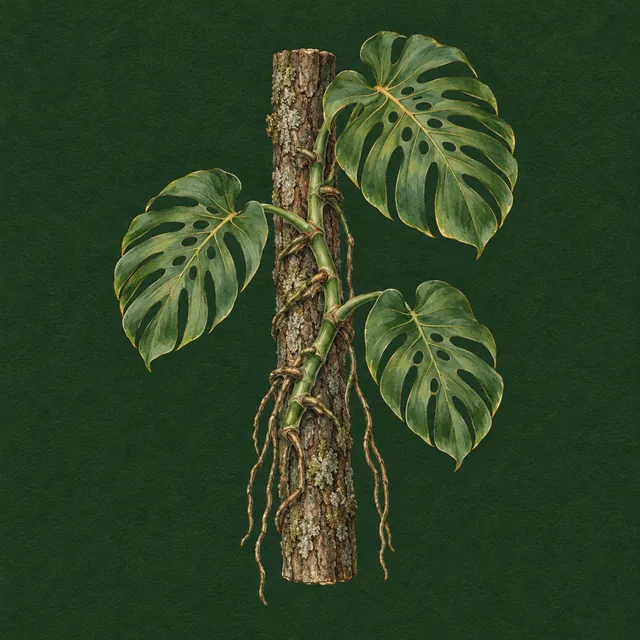
ClimbingUp tree trunks, gripping with aerial roots. 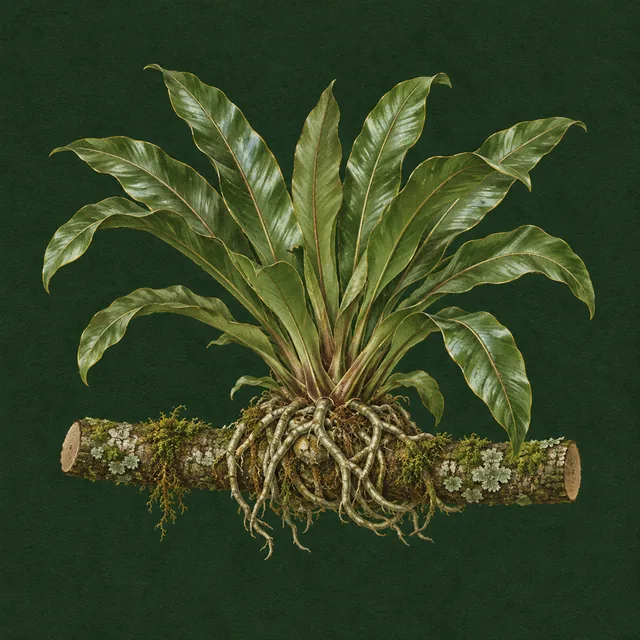
PerchedOn tree branches, not in the ground. Some catch litter in their leaves and root into it11.
How a plant grows in the wild is the best clue to how to keep it.
Part V
Reading a plant name
Every plant on this site is filed under one of four kinds of name.
Scindapsus Genus The group it belongs to. Capital letter.
pictus Species With the genus, names one species. Lowercase.
A species is a kind of plant found in the wild, named in two words. A plant can be named before anyone finds it in the wild, though. On January 25th, 2009, Peter Boyce wrote that Alocasia reginula was in cultivation for a long time before it was found in the wild, and that Alocasia nebula, named in 2000, was still unknown there12.
Scindapsus Genus The group it belongs to.
pictus Species The species it was selected from.
‘Argyraeus’ Cultivar A named garden form. Single quotes, upright type.
In shops this plant is “satin pothos.” That is a common name, and it is not a Pothos.
Alocasia Genus The group it belongs to.
‘Amazonica’ Hybrid name A cross gets a name in single quotes, with no species word.
Its parents are Alocasia sanderiana and Alocasia longiloba ‘Watsoniana’.
Alocasia Genus The group it belongs to.
‘Polly’ Cultivar name Written like a hybrid, but it was selected from one, not made by a new cross.
‘Polly’ began as a single sport among tissue-cultured Alocasia ‘Amazonica’, with thicker leaves and shorter leaf stalks. Its parent is a hybrid, so it is a hybrid cultivar.
Part VI
Living with aroids
Grow the plant the way it grows at home.
These cards are for aroids grown in pots. Aquatic aroids, such as Cryptocoryne and Pistia, live in water and need different care.
-
Light
Most grow under a forest canopy. Bright light without hours of hot, direct sun suits them.
-
Roots
Climbers and perchers root into bark and air. Give them a chunky mix that drains fast.
-
Water
Let the top of the mix start to dry before watering again. Roots left sitting wet will rot.
-
Rest
Tuber growers like Caladium and Amorphophallus die back each year. A resting tuber is not a dead one.
Not every tuberous aroid rests, though: Wilbert Hetterscheid wrote in 2006 that Amorphophallus coaetaneus is an evergreen whose leaves may stay on for three to five years13.
-
Keep from mouths
Biting into an aroid can cause painful swelling of the lips and mouth4. Keep plants away from pets and small children.
Reference
The words, plainly
- Aroid
- Any plant in the family Araceae.
- Spathe
- The single leaf-like hood around the flower spike.
- Spadix
- The spike that carries the tiny flowers.
- Inflorescence
- The spathe and spadix together: what most people call the flower.
- Petiole
- The leaf stalk.
- Node
- The point on a stem where leaves and roots grow.
- Aerial root
- A root that grows from the stem into the air.
- Cataphyll
- A papery sheath that protects a new leaf.
- Tuber
- A swollen underground stem that stores food through a rest. A tuber is not a bulb: a bulb stores food in fleshy leaf scales around a short stem, as in a lily, while a tuber is the swollen stem itself5. No aroid is known to form a true bulb, so “bulb” on a seller’s listing for a tuberous aroid means its tuber5, 6.
- Cultivar
- A named form kept in cultivation, written in single quotes.
Where Next
Pick a path
-
Names
Identification
How a plant gets its name, and why names change.
Open
-
The plant
Morphology
Every part of an aroid, and which parts matter.
Open
-
Flowers & seed
Reproduction
Heat, scent, pollination, and making a cross.
Open
-
Browse
The Archive
Species, cultivars and hybrids, one record each.
Open
-
Explore
All genera
Every genus in the family, on one page and one map.
Open
-
Monthly
The Spathe
A short letter about aroids, once a month.
Subscribe
Sources
The papers behind this page
- POWO (2026). Plants of the World Online. Facilitated by the Royal Botanic Gardens, Kew. The accepted genus and species totals for the family.
- Haigh, A. L. et al. (2023). Target sequence data shed new light on the infrafamilial classification of Araceae. American Journal of Botany 110(2): e16117. The family in one paragraph: its eight subfamilies, where it is most diverse, the range of ways it grows from floating aquatics to epiphytes, and Wolffia globosa as the smallest known species.
- Ruprecht, U., Socher, S. A. & Dötterl, S. (2021). Unexpected Occurrence of Cladosporium spp. on the Inner Surface of the Spathe of the Titan Arum, Amorphophallus titanum. Acta Mycologica 56: 563. The height the titan arum’s inflorescence can reach. The paper’s own subject is fungi on the spathe; the figure comes from its introduction.
- Miyamoto, M., Noma, M., Ishii, J. & Yoshihara, S. (2021). Oral Symptoms Caused by Toxic Plants Containing Calcium Oxalate. The Journal of Pediatrics 230: 258–259. Lip and mouth swelling in a child who bit an Arisaema fruit, with Dieffenbachia and Philodendron named as typical calcium-oxalate plants. A single case report.
- Aroid-L mailing list, Wilbert Hetterscheid, January 13th, 1999. His definitions of bulb, tuber and rhizome in the thread “Tuber vs. Corm”, and the point that a supplier is wrong to call tuberous aroids “bulbs”. On whether any aroid forms a bulb he hedges, adding “I hope” to his statement that none does.
- Aroid-L mailing list, Thomas Mottl, January 12th, 1999. A reply in the same thread stating that bulbs never appear in the Araceae. One list member’s statement, given without a source.
- Aroid-L mailing list, Gabe Thomas, August 26th, 1997. A grower who had seen Alocasia micholitziana labeled “African Mask” and who had a plant labeled the same way that he called Alocasia sanderiana and that Krzysztof Kozminski thought was probably Alocasia ‘Amazonica’. One grower’s report.
- Aroid-L mailing list, Dewey Fisk, April 2nd, 1998. A reply to a list member’s identification question, stating that Alocasia ‘Amazonica’ had been sold for years as “African Mask”. One list member’s statement.
- Aroid-L mailing list, Doug Ewing, September 18th, 2003. A greenhouse manager’s method for cloning Amorphophallus titanum: a 12-inch piece of leaf with its midvein, no hormone, set in rockwool and enclosed in a bottle terrarium, formed a tuber in several months. One grower’s method, not a measured trial.
- Aroid-L mailing list, Tom Croat, January 8th, 2007. A curator at the Missouri Botanical Garden on Monstera dubia: it changes from shingled, mottled juvenile leaves to solid green preadult leaves and never reverts. A short reply on a list thread.
- Aroid-L mailing list, Peter Boyce, February 8th, 2007. Writing from Sarawak, he names Scindapsus crassipes, Scindapsus geniculatus and Scindapsus beccarii among obligate primary epiphytes whose fans of foliage work as litter traps, and says Scindapsus geniculatus roots into that litter as many Anthurium do. A short reply.
- Aroid-L mailing list, Peter Boyce, January 25th, 2009. On Alocasia nebula, named in 2000 and still unknown in the wild, and on Alocasia reginula, which was in cultivation for a long time before it was found in the wild on the Tabin limestones of eastern Sabah. A reply to a list member’s identification question.
- Aroid-L mailing list, Wilbert Hetterscheid, December 29th, 2006. On Amorphophallus coaetaneus: an evergreen species whose leaves may stay on for three to five years, and that is not hardy. A short reply.